|

|
Review of About & Around Rembrandt - Mensje van Keulen. Een Goed Verhaal - Marianne Brandis: Frontiers and Sanctuaries: A Woman’s Life in Holland and Canada. - Oude Emmer, verhoor mijn gebed - Silenced Voices - A Professor and his Wife Among the Blackfeet - Missionaries Among Miners, Immigrants, and Blackfoot - Alberta Elders’ Cree Dictionary - Tjideng Reunion We invite members to submit reviews of books which they consider worthwhile. Zes goede verhalen in Een Goed Verhaal
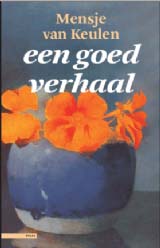
Mensje van Keulen was in 2004 in Calgary voor een lezing o.a. over haar kroniek Olifanten op een Web, voor de CAANS-leden ter plaatse. We namen haar en haar echtgenoot Roel mee uit eten op, eh, nee, Roel en Mensje namen ons mee uit eten op de Calgary Tower. Na afloop wilde we hen het Olympic Plaza laten zien. Tot mijn verbazing, het was een mooie septemberavond, de hele dag was het ongeveer vijfentwintig graden BOVEN nul geweest, lag het laatste stuk van de Achtste Avenue, dat naar dat Plaza leidt, vol met sneeuw dat gepluisd wit plastic bleek te zijn. Midden op straat stond een schouderhoge ton waarop een dwerg met gekruiste benen zat. Van een hoge standaard achter de ton bungelde een vervaarlijke zeis boven zijn hoofd. Wij gingen op de ton af om te zien of die dwerg echt was. Hij was echt en net zo onbewegelijk als een wacht voor de Tower in Londen. We keken om ons heen en zagen dat we in een filmscene terecht waren gekomen. De filmers hadden ons door laten lopen, dachten even dat wij figuranten waren. Net zoals Olifanten niet op of in een Web thuis horen, waren wij de verkeerde mensen op een, op een verkeerde dag, met sneeuw bedekte verkeerde plaats. Mensje’s laatste bundel verhalen, Een Goed Verhaal, had ook wel Zes Goede Korte Verhalen kunnen heten. Een Goed Verhaal is de titel van het zesde verhaal. Goed staat niet voor leuk of opbeurend, maar gaat in dit geval misschien over de afloop. In de vijf andere verhalen gaat veel gaat mis, blijft veel onbeslist. In het eerste verhaal bijvoorbeeld, ‘De Eerste Man,’ ontmoet een dame die in trouwjurkenbusiness zit, na zoveel jaar haar vader. Hij vertelt haar dat hij weer gaat trouwen. Ze schampert hem af. Tegen beter weten in ga je hopen dat ze op haar werk zonder dat ze het weet, haar best doet op de jurk van de nieuwe aanstaande. Maar zo gaat het niet, het gaat verkeerd. Of het in ieders ogen verkeerd gaat is de vraag. In een ander mooi, in de zin van mooi-geschreven verhaal, ‘Zand,’ wordt een man op het strand bedreigd met een mes en verkracht. Hij moet zich daartoe voorover bukken. De heterdaad bezorgt hem een schurende pijn in zijn onderlijf. Hij concentreert zich dan maar op wat er allemaal op het strand ligt, op schelpen enzo. Een mens moet wat! Mensje’s verhalen zijn fictie (zeggen ze). Mmm, vorige week was ik bij een doodzieke vriendin op de Eerste Hulpafdeling in een ziekenhuis. Ze kromp van de pijn in haar onderlijf (aan de voorkant) welke achteraf door een dood stuk darm werd veroorzaakt. De ambulancebroeder, gekleed in een kogelvrij vest, gaf haar morphine en zei dat ze zich moest concentreren op iets leuks, bijvoorbeeld op aanstromende golven, een strand en kleurige ballen op het strand. In haar gezichtsveld hing een grote affiche: Domestic Violence. It happens. We will ask you questions. Vriendin zakt weg op een golf morphine. Ik ga naar huis en lees verder in Mensjes bundel, lees het verhaal ‘Zand.’ Mensje’s fictie is de ander zijn frictie! Ze verstaat de kunst om je binnen een paar regels te laten verkeren in een situatie die je herkent en die je (die ik) vervolgens zou willen bijsturen. Je blijft de bladzijden omslaan zoals je je ‘s morgens wel eens moet omdraaien om althans in je hoofd, je droom af te maken, de zaken recht te zetten. 2010: Mensje van Keulen. Een Goed Verhaal. 2009. Marianne Brandis: Frontiers and Sanctuaries: A Woman’s Life in Holland and Canada. Montreal & Kingston, London, Ithaca: McGill-Queen’s University Press, 2006. [415 pp. Illustrations, Index, Appendices]
Marianne Brandis chronicles this life in meticulous (at times a little overwhelming) detail 3 What enables her to provide such a wealth of information about Madzy’s life and about her writing is the fact that she was fortunate enough to have access not only to her mother’s publications, but also to her extensive collection of letters, diaries, sketches and notes, even recorded tapes from the 1970s. In addition, Madzy’s husband Bill contributed his own account of events particularly during the period of his absence in a prisoner-of-war camp, and further information was supplied by the children, Gerard, Jock, and of course Marianne herself. Madzy’s own memoirs enable Brandis’ detailed account of Madzy’s early life, from her relatively carefree childhood as a daughter of an East Indies administrator who became managing director of the Bank of the Netherlands, to her days as a student of law at the University of Leiden. Trips to foreign countries (Switzerland, England, Norway) broaden her horizon, while conflicts with her rather strict and class-conscious mother provide an early indication of her independent spirit. Even in this early phase Madzy had begun to experiment with writing, and some short pieces were published in student papers. Plans to go to the East Indies came to naught when she became engaged to Wim (Bill). They married and settled in the neighbourhood of New York where Bill, who had planned a career in agriculture but lacked a university degree, worked in a branch office of a grain importing firm based in Rotterdam. It is this period that introduced Madzy to the problems of culture shock and foreshadowed her later experiences in Canada. The couple in fact briefly visited Quebec: it left an idyllic impression which partly influenced their later decision to emigrate to Canada. When the danger of war became evident in 1939 Bill, a reserve officer in the Durch army’s field artillery, applied for a position in active service as cavalry officer. He was accepted, and he and Madzy returned home. They were therefore in Holland at the outbreak of hostilities. When the Dutch army, outdated and ill equipped, was quickly defeated by the overwhelmingly superior Germans, Bill was sent to a German POW camp, leaving Madzy to fend for herself and her little family. 4 It is in the war diary, which Madzy kept in anticipation of Bill’s return, that we find the most fascinating and at times very moving pages of Brandis’ biography. Both in the extended passages relating the daily dangers, hopes and fears, rumours and frustrations, and in the sensitive comments provided by Brandis herself, we get a real sense of the drama of war as it affects ordinary lives. We hear of the presence of resistance fighters in the neighbourhood, but also of collaborators, of frequent bombings and constant concerns about the acquisition of food. As Brandis comments, Madzy describes all this strictly from a personal point of view and does not attempt to inscribe the private experience into a more general historical context. Madzy’s strength lies in her power of observation, and this allows her to use the material later in stories and reminiscences.. The final days of the war climax in the episode which Madzy also described in Land for Our Sons as a kind of epiphany, and as one of the prime reasons for the subsequent decision to emigrate to Canada. On the point of complete exhaustion from starvation she is saved by a handout from Canadian soldiers. Because of this act, and because of the liberation of Holland by the Canadians, the Brandises felt that there was a special debt to be repaid. Moreover, apart from the fact that it might provide better opportunities for a new start, Canada, being a new country, also needed people like them in order to realize its full potential. This is a motif one does not often find in Canadian immigrant literature: The conviction that one has a personal contribution to make to the new homeland, and that the task of building a new country can be shared among outsiders and natives, each with their own special skills, energy and experience, is relatively rare. For this reviewer it was also a revelation to discover the sense of insecurity and malaise that was felt by people living in immediate post-war Holland. Fear of another war and a sense of despair explain why at least a number of Dutch people were willing to leave relatively comfortable and regulated lives within traditional family contexts behind them and embark on what was a journey into the unknown. As undoubtedly for many emigrants, for the Brandis family the years in Terrace were difficult: homesickness is a theme that frequently occurs in Madzy’s private writings, though publicly, and in the columns that she was later to write for Dutch-Canadian newspapers, an optimistic tone is maintained. The bonds with Holland remained strong, but the putting-down of roots in Canada is clearly demonstrated by the fact that in the 1950s, in Vancouver, both Madzy and Bill obtained university degrees. A subsequent move to Antigonish, in Nova Scotia, brought Madzy into contact with the Antigonish Movement, and led to her being employed as librarian of the Extension Department at St. Francis Xavier University. Her emigrant experience stood her in good stead here, but she became discouraged by the unwillingness of some of the settlers to learn to integrate into the community. Another move, like the previous ones determined by Bill’s career opportunities, brought the family to Burlington, Ontario, and to some extent ‘back into civilization.’ Doubts as to whether they had made a mistake in leaving Vancouver now seemed at least partially resolved, for in this area there might again be greater opportunities for the children. Indeed, from now on the children’s lives are given more prominence in Brandis’ narrative. At the same time there is also a subtle shift in the treatment of the subject of her biography. With the onset of rheumatoid arthritis during the final years in Terrace, Madzy’s world had begun to be more restricted and writing had gradually become an outlet for her creative – and emotional – impulses. If Canada in the immediate post-war period had been seen very much as a safe haven, it is writing which now becomes Madzy’s sanctuary, all the more since most of her writings have an autobiographical thrust. This theme Brandis develops with great sensitivity and insight; there are a number of ‘meditations’ on the nature and meaning of (auto)biographical writing which help to clarify not only Madzy’s project, but that of Marianne Brandis herself. This is not to say that the dichotomy Canada/Holland does not remain a pervasive motif: Madzy clearly continues to oscillate between the regret for her family and for the cultural and social opportunities in Holland, while at the same time recognizing the possibilities provided by her new homeland (compare p. 278 and 286!). Visits to Holland only reinforced this ambiguous attitude. In her correspondence Madzy always retained a cheery and positive tone; her private writings, however, show much soul-searching – of which Marianne only became aware, she reports with regret and a certain resentment, when perusing these materials after her mother’s death. It is this complex and ambivalent feeling that undoubtedly inspired Madzy to begin writing a history of Canada in Dutch, just as she was later to write a history of Holland for her children, in English (1982). In Nova Scotia she had written a number of short stories for the Atlantic Advocate, and columns for The Maritime Cooperator and the local newspaper,and she now wrote a series of columns on emigration for the Nederlandse Courant. In 1965 Madzy and Bill moved to a property near Carlisle which they baptized ‘Brandstead’. It was to be Madzy’s last home. Here the family finally seemed to have found their ‘sanctuary’ in a quasi-idyllic setting in which the ideals of a simple life of self-sufficiency could be realized. Thanks partly to their son Gerard’s career as a wood engraver and maker of hand-made books, they cultivated close contacts with the artistic colony there. Madzy continued her writing, but also took up painting, and we have a number of examples of her work in the attractive illustrations provided in the text. According to Marianne, Madzy was the guiding spirit of the family in these years, and she credits her for strongly encouraging the children’s artistic and intellectual development. Unfortunately, Madzy’s health deteriorated more quickly now; in rapid succession she suffered an attack of peritonitis followed by shingles. Her eyesight also declined, and later she contracted glaucoma. Undeterred by her physical handicaps, however, she produced a number of works, among them a children’s book with illustrations by Gerard, a book entitled the Whatman Book, and a selection of her previous writings, published by the Netherlandic Press in Windsor under the title A Scent of Spruce (1984). Perhaps most importantly, she began her memoirs, first speaking them onto tape and then having them typed out. Much of the material on Madzy’s early years comes from these sources. After being bed-ridden for two years, Madzy died peacefully on October 5, 1984. In an epilogue, Marianne Brandis attempts to analyze her mother’s character in intimate and personal terms. She voices criticism of her mother’s reluctance to engage in discussions about personal or family problems. Madzy, like many members of her generation, was undoubtedly changed by the stresses of war and developed the typical strategies of survivors of trauma. She was also a person of great ambiguities. Madzy’s inner life was, Marianne contends, primarily preoccupied with the past, yet she continually hatched projects for the future. At times she might appear arrogant and mistrustful because of her high ideals, which were perhaps impossible to fulfill, yet she took her role as educator, both within her family and in her public writing, seriously. Her notions were somewhat Victorian, yet she was also involved in a struggle for emancipation from her family. She was not a feminist in the current use of the term in that she never questioned Bill’s superiority in the family and where career decisions were concerned. The few years in which she was the sole authority figure, during the war, ended when Bill returned, and Madzy never questioned this state of affairs, though in reality she remained a strong and inspiring figure. Her greatest fear in later life was to become a burden on Bill and the children: her physical deterioration was accompanied by agonizing questioning about the future. It is clear from passages such as this conclusion, and those beginning with p. 382 and again at the end of each chapter, that Marianne Brandis has approached her subject with circumspection, using the possibilities of the genre from the basis of a solid theoretical grasp. As a historian and novelist herself, she brings to her material a wealth of learning. At the same time, she never loses sight of the person at the center of her project: the book is clearly a labour of love, even if not of uncritical love. Crucial for the nature of the project was the author’s decision to let Madzy speak as much as possible in her own words. This means that the biography is in fact a joint achievement. An unusual degree of directness and immediacy in the experiences as lived through thereby becomes possible. This book arrives just in time to memorialize a period in the Dutch and Canadian past that is in the process of changing from ‘lived’ to ‘documented’ history. Marianne is able to establish a link with the prewar years in Holland through her mother, and has personal experience of the earliest post-war years and those of the great emigration waves to Canada. Those of Brandis’ generation will appreciate this book for its vivid and often moving re-creation of this period. More generally, this biography documents the emigrant experience in a true light: as at once unique and universal. From an even more privileged vantage point, the book reveals itself as a searching, probing, but also affirming, and ultimately loving portrait of a remarkable woman. Gus Dierick 1 Maxine Brandis, Land for Our Sons (London: Hurst & Blackett, 1958). Readers of the Canadian Journal of Netherlandic Studies may remember a short article about Madzy Brandis’ book entitled “Maxine Brandis's Land voor onze zonen, Belevenissen van een emigrante in Canada” (Issue XXI, ii - Fall/Automne 2000, 14-19). 2 . . . among which is a book about her own life titled Finding Words: A Writer’s Memoir (see p. xvi of the text under discussion here). 3 There is even an Appendix on “Sources, Dating, Translation, and the Use of Family Archives,” and an “Ancestry.” 4 In later years, Bill provided a factual and objective but helpful account of his own experiences in the POW camp. Oude Emmer, verhoor mijn gebed. Haiku’s zijn korte gedichtjes waar geen rijmregels voor gelden maar wel een vrij strak schema van lettergrepen, 5 – 7 – 5. Tot zover was ik op de hoogte. 
Earle Waugh, as I have just learned (I saw it in a bookstore), edited the massive (604pp.) Alberta Elders’ Cree Dictionary, Edmonton: University of Alberta Press, published in 1998. As the publisher notes, “Cree is the most widespread native language in Canada, and this comprehensive and user-friendly dictionary will serve students, business, governments and media.” The dictionary is the fruit of twenty years’ work and incorporates two or three previous partial compilations. A wonderful job! Tjideng Reunion, A Memoir of World War I Paperback, 470 pages, including 5 maps, and 20 illustrations. $32 Cdn Review of About & Around Rembrandt - Mensje van Keulen. Een Goed Verhaal - Marianne Brandis: Frontiers and Sanctuaries: A Woman’s Life in Holland and Canada. - Oude Emmer, verhoor mijn gebed - Silenced Voices - A Professor and his Wife Among the Blackfeet - Missionaries Among Miners, Immigrants, and Blackfoot - Alberta Elders’ Cree Dictionary - Tjideng Reunion |
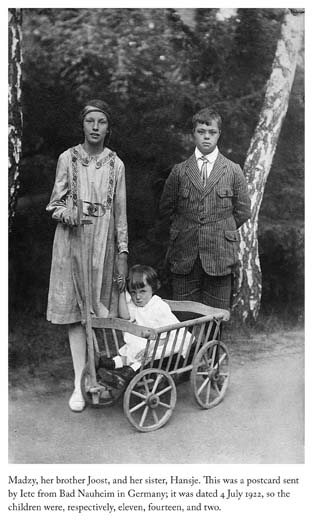 In 1947 Madzy Brender à Brandis, her husband Wim (Bill) and their three children emigrated from Holland to Canada. They settled on a farm in Terrace, in what was then a remote area of B. C. Madzy, who had already written some short stories in Holland, eventually sat down to write about her own experiences, and about the problems of emigration in general, in a book entitled Land for Our Sons (1958), later translated into Dutch as Land voor onze zonen.